Skip to content

(804) 282-1289

info@prospectblue.com

  • LinkedIn
  • Facebook
  • Instagram
  • YouTube
ProspectBlue
  • Home
  • About
  • Services
  • Career Seekers
  • Clients
  • Blog
  • Contact
  • 10 Easy Tips for Protecting Your Investment in New Talent

    10 Easy Tips for Protecting Your Investment in New Talent

    Record high job turnover in the last two years has companies large and small running a relentless loop of recruiting and training. With managers and veterans repeatedly pulled away from their core work, productivity has dipped across industries. Turnarounds are especially costly when a new employee doesn’t stick around, and, according to the Bureau of Labor Statistics, some 20 percent of U.S. workers are leaving their jobs within 45 days of being hired.

    Better training and optimized onboarding can slow the revolving door. From learning specialists, global companies, and small businesses, we’re seeing that some very basic steps are game changers for retention.

    • Have a new-employee protocol before you bring on a new employee
    • Begin onboarding before day one. Even reminding a new hire’s manager to think about logistics the day before the employee shows up will make a difference.
    • Have technology set up before a new employee arrives.
    • Assign a mentor, either peer or senior.

    Two things that seem obvious but are often skipped:

    • Discuss the role and its responsibilities with the new employee.
    • Introduce them to the rest of the team and a selection of higher-ups.
    • Discuss your company culture.
    • Best question: “What questions do you have?”
    • Let new employees work on a project soon after arrival.
    • Schedule designated intervals to check in with new hires, and follow through!

    These easy-to-implement tweaks to onboarding can help keep your output steady and your new talent yours.

    Jessica Barnes

    January 6, 2023
    Uncategorized
  • Richmond BizSense RVA 25 Presented by Keiter

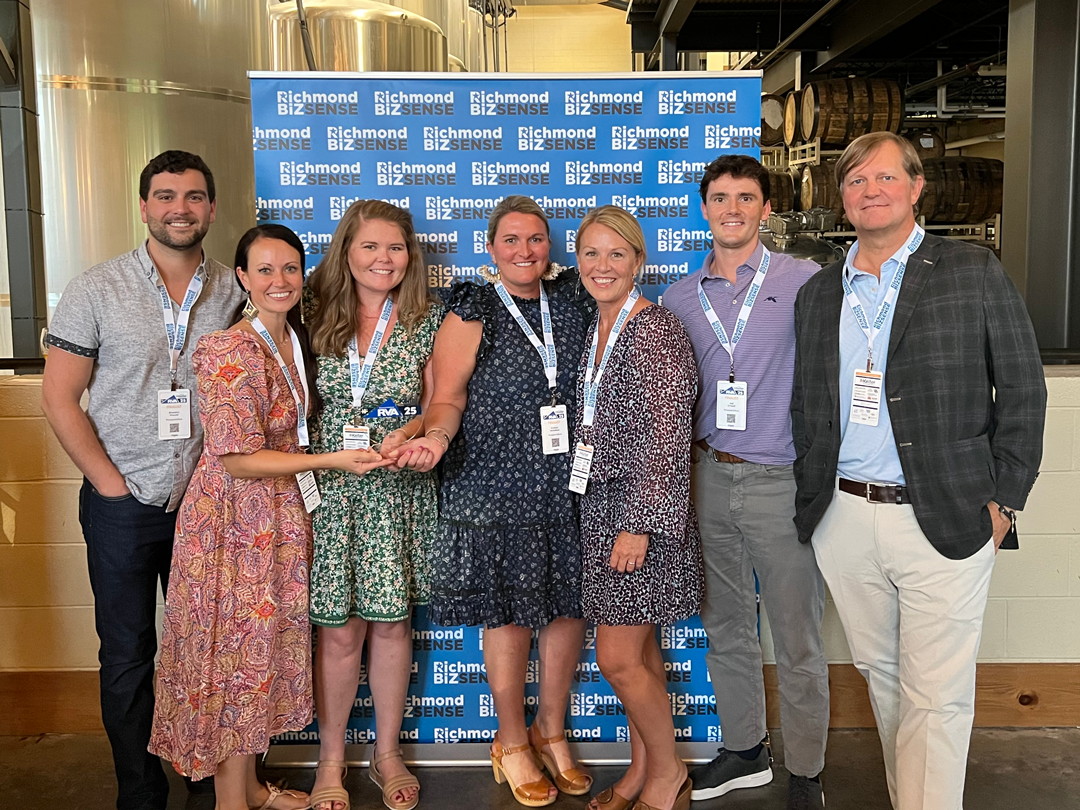
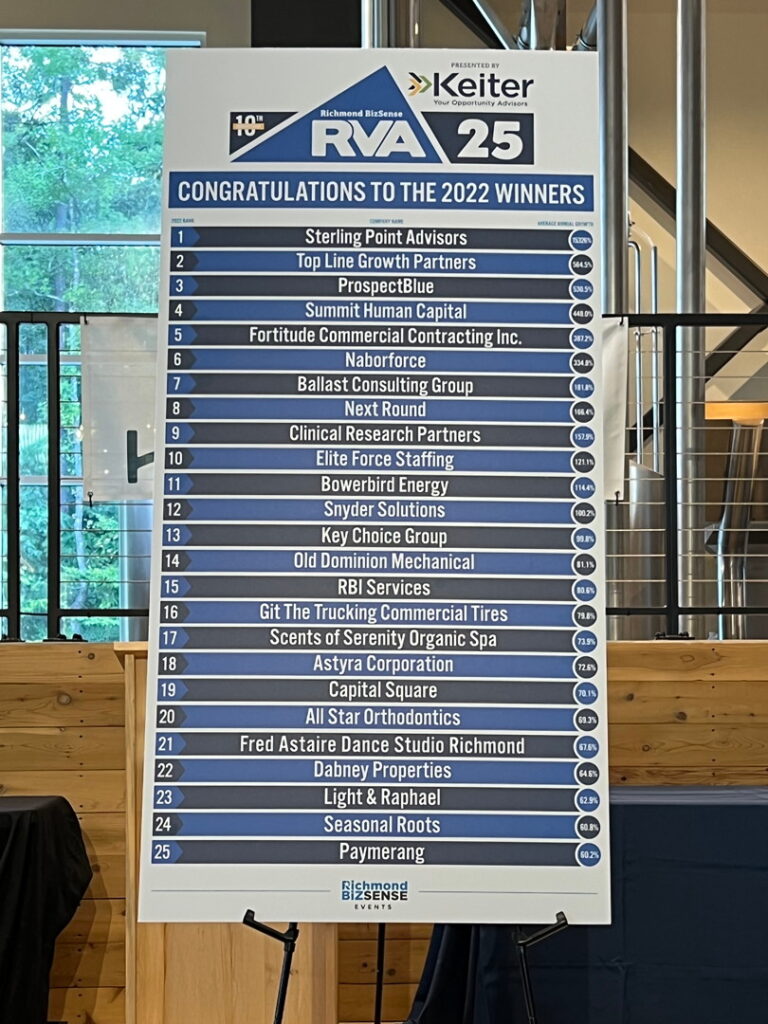
    Richmond BizSense RVA 25 Presented by Keiter

    ProspectBlue placed 3rd for 530.5% growth from 2019-2021 (source: richmondbizsense.com)

    Jessica Barnes

    September 21, 2022
    Uncategorized
  • “Job Ghosting” Is on the Rise

    “Job Ghosting” Is on the Rise

    The Wall Street Journal recently published an article stating that more new hires than ever before are simply not showing up for their first day on the job. According to the article,  “Manufacturers, restaurants, airlines and cleaning companies are among the employers seeing a surge of job seekers who accept positions — and are neither seen nor heard from again.”

    Some industry insiders attribute the strong labor market to this lapse in professional etiquette.  When there are more job seekers than jobs available, candidates often don’t hear back from companies. The reverse is true when there are more jobs than qualified candidates. A younger, more inexperienced workforce is another possible explanation for the rise in job ghosting.  

    How can you minimize ghosting in your business? Streamline your hiring process so it does not draw on for too long. The longer a job applicant has to wait to start a job, the greater chance that they may find something better. It is also important to stay in touch with candidates and keep the lines of communication open. ProspectBlue can help you eliminate unnecessary steps in your recruiting process to find the right people for the right jobs more quickly – and increase the likelihood they will be there on Day 1!

    Jessica Barnes

    June 8, 2022
    Uncategorized
  • Roots Of Resistance

    Roots Of Resistance

    THE ROOTS OF RESISTANCE

    Understand resistance to hybrid work and learn how to lean in to flexibility

    Being nimble has always been beneficial, but it’s critical now. Ripple effects from Covid variants continue to send waves through the business world, and clinging to old systems will make it tough to survive. The most effective leaders will be those who are willing to accept uncertainty and changing scenarios, and enable their teams to respond and adapt.

    WHY TRY TO OVERCOME RELUCTANCE

    1. Survey after survey in the spring of 2021 showed that employees, with more urgency than ever, want options to continue hybrid work schedules, and they’re voting with their feet. This summer, behemoths such as Google and Apple faced significant internal opposition to initial plans to compel workers back into the office, plans which have been delayed amid a surge in cases. A comprehensive July article by McKinsey & Company states:

    “At best, the rosy messaging of a grand return to the office is falling flat. At worst, the tone deafness of the messaging may also be accelerating what’s already shaping up to be the “great attrition” of 2021 (and 2022 and even 2023). At companies across the globe, workers are leaving at much higher rates than normal. Recent surveys found that 26 percent of workers in the United States are already preparing to look for new employment opportunities and 40 percent of workers globally are considering leaving their current employers by the end of the year.”

    2. Sticking with hybrid work can boost the bottom line. Business Wire and Forbes have reported on research released by Owl Labs in late June, which shows that “close to two-thirds (62%) of European business leaders reported that hybrid working makes companies more profitable, with Enterprise businesses (1,000+ employees) the most likely to think so (73%) versus small and medium-sized companies (55%).”

    3. The gulf between employers and employees is better bridged than broadened. The McKinsey report warns, “Employers are underestimating the disconnect and failing to realize that the ‘finish line’ is a mirage. In the enthusiasm about the return from remote working, business leaders run the risk of actually increasing the disconnect between themselves and their people. The idea that we will cross a finish line and suddenly be done with all the hard stuff seems to exist only in the minds of senior leaders.”

    SEARCH FOR THE SOURCE

    Why aren’t some leaders ready to give the green light to hybrid work? Aside from logistical factors, some psychological, emotional, and situational forces are at play.

    While virtually no one was unaffected by the pandemic, there’s no denying that most business leaders experienced it differently than most workers. Many had the good fortune to be insulated from the worst that COVID-19 brought to the world, making it easier to imagine a quick and eager return to pre-pandemic routines.

    A host of reasons for resisting more permanent hybrid work can be attributed to cognitive biases, or mental blind spots, which Gleb Tsipursky explores in depth, writing in Fortune in June.

    Tsipursky examines the following five biases that can hinder leaders from enacting long-term change.

    • Status quo bias is the simple but strong desire to return to what we know as normal, and therefore deem appropriate and right.
    • Anchoring bias: Similar to status quo bias, this one anchors us to our early experiences. Executives who built their careers on long hours at the office, surrounded by people and group energy, have a greater leap to make in conceiving of increased productivity by employees working alone at home.
    • Confirmation bias: “Our minds are skilled at ignoring information that contradicts our beliefs, and looking only for information that confirms them,” Tsipursky writes. “Reluctant leaders usually tell me they don’t want to do surveys because the feel confident that the large majority of their employees would rather work at the office than at home. They wave aside the fact that large-scale public surveys show the opposite.”
    • False consensus bias: A cousin to confirmation bias, this blind spot leads us to assume that people in our shared environment (such as a company) think the way that we do – more than they actually do. This excerpt from McKinsey & Company’s article shows the bias in action:

    “More than three-quarters of C-suite executives recently surveyed by McKinsey report that they expected the typical “core” employee to be back in the office three or more days a week. In stark contrast, nearly three-quarters of around 5,000 employees McKinsey queried globally would like to work from home for two or more days per week, and more than half want at least three days of remote work.”

    • Functional fixedness calls to mind status quo bias, but fits even more precisely the moment we’re in now. We are inclined to stick with existing perceptions of how systems should work, ignoring other possible functions and methods – even if they work better.

    GET FLEXIBLE ABOUT WORK

    Understanding the forces that lead us to resist change can free us to embrace it. By seizing the opportunity to redefine the way your business works, you can retain talent and experience within your company and avoid the cost of replacing employees. If you’re hiring, you’ll definitely need flexibility to be competitive. Here are a few ways to get started:

    • Expand the psychological safety zone. In order to master the complicated scheduling that successful hybrid systems require, employers need information. More than they have, and more than they used to request from employees. An article on INSEAD’s Leadership and Organizations blog, titled “Without Psychological Safety, Hybrid Work Won’t Work,” advises leaders on “the delicate task of expanding the range of work-life issues that are safe to raise.” To discover what workers need and want, managers need to develop sensitive ways of asking more, and employees need to feel safe answering honestly.
    • Openly listen. This is the time to truly be open to differing opinions and concerns. You may need to meet employees where they are and embrace compromise. Admitting that you don’t have all the answers is a good thing, and allowing employees to serve as partners in designing a new work model can boost its success. Be clear from the start that creating one will take some time.
    • Bend your knees and be ready for bumps. Challenges pop up fast and aren’t always foreseeable. Our new landscape demands that we get comfortable with uncertainty, maintain readiness to expand or contract, experiment, and learn from our experimentation.
    • Budget and train for change. Look for ways to make change more affordable or, at minimum, budget for unexpected modifications. Help managers and employees be mentally ready for change. Have open communication from the start so that everyone shares the same expectations of a new system, and continue the conversations by creating official forums for discussions or Q&As.

    CONCLUSION

    We’re still social people who like to work with other people. The pandemic taught us that some face to face time is critical, especially to strengthen connections, build trust, and develop new relationships. Hybrid work still delivers those benefits, along with increased productivity and profit from incorporating remote work.

    To begin building a flexible work model, ask, listen, and partner with your people. Lead with transparency and curiosity. Strive to employ fewer mandates and more experiments. ProspectBlue can help

    Jessica Barnes

    September 16, 2021
    Uncategorized
    legacy
  • Navigating the Hurdles of the Hybrid Workplace

    Navigating the Hurdles of the Hybrid Workplace

    After Covid-19 restrictions anchored most businesses in a fog of suspended work, after the months of improvised, reactive work that followed, organizations are again charting courses and moving forward—but they’re in brand new territory. It’s clear that in some industries 9-5 office hours are largely obsolete, that employees want flexibility in when and where they work, and that, in a blazing hot job market, they’ve got greater ability to call the shots. Offering flexibility is becoming crucial to retaining and recruiting top talent, so it’s no surprise that many organizations, public and private, small and large, are settling on hybrid schedules that allow employees to work in the office some days and remotely on others. Along with the benefits of reduced costs and more diverse, engaged workers, the new paradigm brings challenges that will require some artful navigation.

    NUMBERS IN THE NEWS

    A Wall Street Journal article in May cited an Ernst & Young global survey of more than 16,000 employees, in which “90% said they wanted flexibility in when and where they work post-pandemic. More than half said they would consider quitting their jobs if they didn’t have that flexibility.”

    Writing in the Harvard Business Review, Nicholas Bloom said that interviews with hundreds of managers and research he conducted with colleagues Jose Maria Barrero and Steven J. Davis have determined that “about 70% of firms, from tiny companies to massive multinationals like Google, Citi, and HSBC, plan to move to some form of hybrid working.”

    A Catalyst survey of more than 7,400 global workers, cited by Bizwomen in June, found that “women caring for children are 32% less likely to say they intend to leave their jobs if they are able to work remotely, compared to women with the same childcare responsibilities but no access to remote work.”

    Stats like these abound. For business leaders, adapting to the new reality means building a new system of work that will require a shift in both mentalities and logistics. Challenges will include making sure that communication and productivity remain efficient, protecting remote workers from becoming second class citizens with lower rates of advancement, and planning for changes in the use of physical space.

    LISTEN TO YOUR PEOPLE

    Building mutual trust and respect between managers and workers, as well as within teams, is essential. It not only allows hybrid systems to function successfully, but also becomes a perk for all sides. Leaders can trust that work will get done in a timely manner and workers are liberated from feeling scrutinized and monitored.

    • One size does not fit all. There’s no blueprint for flexibility that will work for every organization. Ask employees what they need and what they want—and listen.
    • Listen empathetically. When leaders are genuinely empathetic to life situations, such as the burden of finding and affording childcare, supporting ailing parents, or managing long commutes, workers know they’re respected. Getting creative with logistics can help retain talented employees, earning loyalty and appreciation while preserving institutional knowledge.
    • Communicate clearly. Get buy-in from all team members when creating a hybrid schedule and communicate it clearly in advance, so everyone sets out with the same expectations.
    • Be flexible about flexibility. It’s new. Some things an organization tries will fail. When they do, get feedback and try something else.

    BE STRATEGIC ABOUT SCHEDULES

    Determining which employees come into the office on which days is an obvious task in building out a hybrid schedule, but may warrant more thought than expected. Before even thinking about days of the week, pause to decide who will make that choice—workers or their managers.

    In light of his research, HBR’s Nicholas Bloom began recommending that managers make the call. Self-selected remote workers may risk being excluded or overlooked in the near term, and diverging paths between demographic groups can cause deeper trouble down the road. “Single young men could all choose to come into the office five days a week and rocket up the firm, while employees with young children, particularly women, who choose to (work from home) for several days each week are held back,” he writes. “This would be both a diversity loss and a legal time bomb for companies.”

    Regardless of who creates the schedule, synchronizing in-person days for teams will be more efficient than trying to manage collaborating groups that have some people at home and some in the office. Dennis Meyer, a freelance television producer in Los Angeles quoted in a CNN Business story in June, puts it this way: “Nothing is faster or more practical than just looking across the room and talking to someone with your voice. The instant you have to pick up a phone or write a message you’re wasting valuable time.”

    Organizations might also consider synchronizing remote work. While this structure is more challenging to those working across time zones, quicker response times within remote teams that are working simultaneously make communicating and decision-making far more efficient.

    RETHINK YOUR SPACE

    Hybrid models can significantly reduce costs as long as the use of physical space is efficient. Start with thoughtful scheduling to avoid overcrowding on certain days and empty rooms on others, but also consider changes to office design. Maybe cubicles make way for more meeting rooms, personalized stations become communal desks, or blank walls in collaborative spaces get dressed with screens to circle up with remote colleagues. For many, a little remodeling might beat letting go of the lease.

    There’s no denying that the path to a smooth hybrid work model will contain some hurdles. Navigate them by listening to your people and communicating well in order to build mutual trust and respect. With a little strategy and willingness to keep trying to find what works, organizations can save time, spend less, and achieve more with a happy and productive workforce. ProspectBlue Flex can help. Our experienced recruiters specialize in workplace flexibility, connecting employers with top candidates in competitive markets. We offer strategic consulting to help organizations navigate change, achieve growth, and bring people back to work. flex@prospectblue.com

    Jessica Barnes

    July 14, 2021
    Hybrid, Remote, Uncategorized
    legacy
Sign up to receive the latest career news and company information.
Sign up

  • Home
  • About
  • Services
  • Career Seekers
  • Clients
  • Blog
  • Contact

5101 Monument Ave, #101 Richmond, VA 23230

(804) 282-1289

info@prospectblue.com

©2025 ProspectBlue. All Rights Reserved.

  • Privacy Policy
  • LinkedIn
  • Facebook
  • YouTube
  • Instagram